
Even the Best Algorithms Don't Know the Street
The agent knows what the data can’t: the dated kitchen, the loud road, the street that doesn’t behave like its zip code.
 Joshua SturgisPublished Updated 2 min read
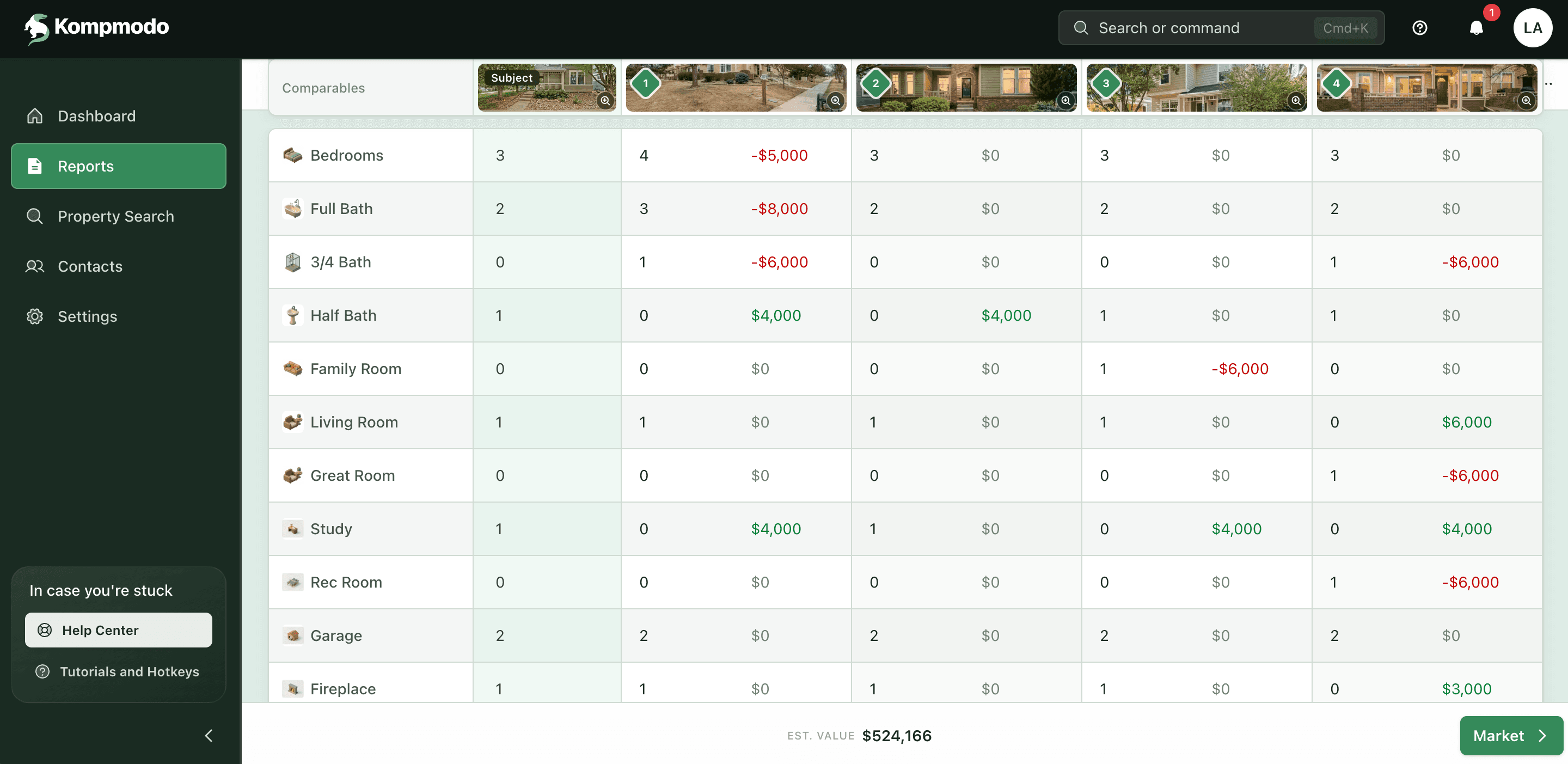
I've sold houses in Northern Colorado for twenty years. When we launched Kompmodo here in 2022, the idea was simple: price a house the way an appraiser would, and leave the choosing to the agent. You picked up to four comps from the MLS yourself. The adjustment values, meaning what a bath or a garage bay was worth, came from MLS data and the knowledge of local appraisers.
That worked because we knew the market. It also had limits. A value that holds across Northern Colorado doesn't always hold on both sides of the same town, and four comps don't leave much room when a house is unusual.
So when we rebuilt Kompmodo, we leaned harder on the math.
What the algorithm does now
Today our adjustment values come from deep statistical analysis of thousands of closed sales in a specific market. The model works out what individual features are bringing in that submarket, not just the broader region. A finished basement in one part of town can be worth something different from the same basement twenty minutes away, and the values reflect that.
Comp selection changed too. You can still pick your own, now up to six, or you can let our AI comp selection pick them. That tool learned from years of comps that real agents chose in Kompmodo, and we trained it only on reports where the price closely matched what the house eventually sold for. It learned from the picks that held up.
Put those together and you have a strong baseline price before you've touched a thing.
What it still can't see
A baseline is where the work starts, not where it ends. A closed sale records square footage, bedrooms, baths, garage bays and a price. It doesn't record that the kitchen the listing called "updated" was updated in 2004, or that the house backs onto a road that gets loud at five o'clock.
One real street here. Two houses close together that looked alike on paper and sold far apart, and what you knew that the data didn't. Keep addresses and client names out.
That's where you come in:
Swap a comp the AI chose for one you know is a better match.
Move an adjustment for condition, finish or the buyers likely to show up.
Every change is recorded against the starting figure with your note beside it, so when a seller asks why, you can point to the line.
The algorithm gets you to the neighborhood quickly and on solid ground. You're the one who has walked the block and opened the closets.
Why both matter at the table
Sellers are used to numbers from software they can't see into, and they'll dig in against a number with no reasoning behind it. Here the work is in front of them: the comps, the adjustments, and every place you changed something and why. Walk them through how you got there, and you stop defending a price and start working it out together.
We're proud of the data and the AI under the hood. But the point of a strong starting number is to give your expertise something worth refining.
Start your 30-day trial